—— 要投稿,上万维,轻松学术交流

严正声明

本站非期刊官网,非中介代理,
不向作者收取任何费用!
举报微信:13140028228 冯老师

态度公正、信息求实、投稿自助、使用免费
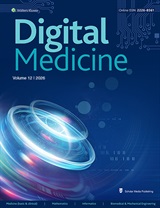
Digital Medicine(国际刊号)(OA期刊)(不收版面费审稿费)
国际号刊 - 季刊
  • Digital Medicine(国际刊号)(OA期刊)(不收版面费审稿费)
  • 复合影响因子:0
  • 维普目次
  •  
  投稿方式:官网投稿
  • 栏目频次
  • 一作占比
  • 单位占比
  • 热词
暂无栏目信息.
暂无一作信息.
暂无单位信息.
暂无关键词信息.
  • 更多

    期刊简介

  • 《Digital Medicine》(季刊)是由大连医科大学附属第二医院主办的一本经过严格同行评议的在线连续出版期刊。收录范围涵盖:医学影像研究、数字与信息技术、人类与数字解剖相关研究、计算机辅助设计/制造/分析技术在临床中的应用研究、人工智能应用、数字医院建设与管理、生物工程、放射诊断与放射治疗、区域医疗协同与信息资源共建共享数据库建设、远程医疗会诊与教育,以及其他相关分支学科。

  • 基本信息

  • 期刊名称:Digital Medicine(国际刊号)(OA期刊)(不收版面费审稿费)
  • 主管单位:
  • 主办单位:大连医科大学附属第二医院
  • 国内刊号:无CN刊号
  • 国际刊号:ISSN 2542-629X
  • 出刊日期:
    期刊定价:
  • 邮发代码:
  • 所在省区:辽宁
    邮政编码:
  • 联系地址:

  • 投稿信息

  • 学科分类:临床医学
    版面费用:不收版面费
  • 字数要求:0
    查重要求:-
  • 复合因子:0
    综合因子:0
  • 审  稿 费:
    稿费:待核实
  • 本刊可发:
  • 特殊属性:外文期刊

  • 联系方式

  • 投稿网址:https://www.editorialmanager.com/dm/default2.aspx
  • 官网网址:https://journals.lww.com/dm/pages/default.aspx
  • 电话传真:
  • 电子邮箱:editor@digitmedicine.com(官网信息)
  • 微信公众号:大医二院学科建设与科研管理部

审稿时间:暂无参考数据,审稿时间不确定!

投稿难度:网友分享,仅供参考

见刊周期:-

温馨提示以上只是参考信息,实际情况会根据投稿主题、稿件质量和数量、审稿流程有所差异。想获得更准确信息请联系期刊的编辑部进行咨询。

欢迎点评!让信息更透明,使投稿更轻松!
    • 审稿时间:
      是否录用:
    • 发表排期:
      查重要求:
    • 有无课题:
      有无回复:
    • 我的学历:
      我的职称:
    • 审稿费用:
      版面费用:
    • 稿       费:
      稿件字数:
    • 投稿难度:
    • 该刊可发:
    • 投稿主题:
匿名: 验证码: 点击切换验证码
    • 1、该刊只有国际刊号。

      2、投稿方式:在线投稿。

      3、官网网址:

      https://journals.lww.com/dm/pages/default.aspx

      (主办单位微信公众号信息)

      4、投稿系统:

      https://www.editorialmanager.com/dm/default2.aspx

      5、官网邮箱:editor@digitmedicine.com

      6、出刊日期:季刊,逢季末月出版。

      7、官网信息:作者发表无需承担任何费用

      8、主办单位微信公众号:大医二院学科建设与科研管理部

      2026年4月23日星期四

      《Digital Medicine》期刊2026年第一期正式上线!

      【主办单位微信公众号信息】

      大医二院学科建设与科研管理部 2026年4月1日

      近日,由大连医科大学附属第二医院主办、国际数字医学会提供学术支持的 《Digital Medicine》期刊2026年第一期正式上线!

      期刊简介

      《Digital Medicine》(ISSN 2542-629X)是由大连医科大学附属第二医院主办的一本经过严格同行评议的在线连续出版期刊,以全英文形式出版,季刊发行。本刊实行开放获取(Open Access)模式,所有内容均可免费阅读、下载和传播。期刊面向全球发行,作者发表无需承担任何费用,包括稿件提交费、处理费、出版费及图片彩色印刷费均予免除。本刊实行严格的匿名同行评审制度,确保学术评价的公正性与学术诚信,致力于构建一个充满活力、兼具包容性的学术共同体,倡导思想多元,鼓励创新探索。

      征稿范围

      《Digital Medicine》 收录范围涵盖:医学影像研究、数字与信息技术、人类与数字解剖相关研究、计算机辅助设计/制造/分析技术在临床中的应用研究、人工智能应用、数字医院建设与管理、生物工程、放射诊断与放射治疗、区域医疗协同与信息资源共建共享数据库建设、远程医疗会诊与教育,以及其他相关分支学科。期刊优先发表具有临床价值及临床转化意义的文章。

      欢迎投稿

      目前期刊2026年第一期已正式上线,各项投稿通道持续开放。欢迎临床医生和科研工作者踊跃投稿!

      投稿方式:https://www.editorialmanager.com/dm/default2.aspx本刊官网:https://journals.lww.com/dm/pages/default.aspx编辑部邮箱:editor@digitmedicine.com

      Instructions for Authors

      【官网信息】

      The

      Editorial Office is pleased to answer any questions you may have about

      preparing your manuscript in accordance with our guidelines.

      Email: editor@digitmedicine.com

      AIMS AND SCOPE

      Digital

      Medicine, a publication of International Society of Digital Medicine,

      and academically supported by Second Hospital of Dalian Medical

      University, is a peer-reviewed online continuous publishing journal The

      journal allows free access (Open Access) to its contents and permits

      authors to self-archive final accepted version of the articles on any

      OAI-compliant institutional / subject-based repository. The journal does

      not charge for submission, processing or publication of manuscripts and

      even for color reproduction of photographs.

      The

      scope of Digital Medicine covers the medical imaging research, digital

      and information technology, human and digital anatomy related research,

      computer-aided design/manufacturing/analysis technology in clinical

      application research, artificial intelligence application, digital

      hospital construction and management, bioengineering, radiological

      diagnosis and radiotherapy, regional medical collaboration and

      information resource sharing database construction, telemedicine

      consultation and education and other sub-disciplines. Articles with

      clinical interest and implications will be given preference.

      ONLINE SUBMISSION

      First-time Users

      Please

      click the Register button at

      https://www.editorialmanager.com/dm/default2.aspx. Upon successful

      registration, you will be sent an email providing your username and

      password. Save this information for future reference.

      Note:

      If you have received an email from us with an assigned username and

      password, or if you are a repeat user, do not register again. Once you

      have an assigned username and password, you do not have to re-register.

      Authors

      Please

      click the Login button from the menu at the top of the page and login

      to the system as an author. Submit your manuscript according to the

      author instructions. You will be able to track the process of your

      manuscript through the system.

      JOURNAL POLICIES

      Duplicate Publication

      Manuscripts

      are reviewed for possible publication with the understanding that they

      are being submitted only to the Digital Medicine and have not been

      published, simultaneously submitted, or already accepted for publication

      elsewhere. The Editorial team may subject any manuscript submitted for

      consideration of publication in the Digital Medicine to

      plagiarism-detection software.

      This

      does not preclude consideration of a manuscript that has been rejected

      by another journal or a complete report that follows publication of

      preliminary findings elsewhere, usually in the form of an abstract.

      Copies of any possibly duplicate published material should be submitted

      with the manuscript under consideration, with a statement in the cover

      letter as to why the manuscript currently being submitted is not a

      duplicate publication.

      Disclosure of Conflicts

      Authors

      must state all possible conflicts of interest in the manuscript,

      including financial, consultant, institutional and other relationships

      that might lead to bias or a conflict of interest. If there is no

      conflict of interest, this should also be explicitly stated as none

      declared. All sources of funding should be acknowledged in the

      manuscript.

      All

      relevant conflicts of interest and financial support and sponsorship

      should be included on the title page of the manuscript with the heading

      "Conflicts of interest" and "Financial support and sponsorship ".

      For

      example: "Conflicts of interest: *** is an Editor-in-Chief/Associate

      Editor/Editorial Board Member of the journal. The article was subject to

      the journal's standard procedures, with peer review handled

      independently of this editor and his research groups. /A has received

      honoraria from Company Z. B is currently receiving a grant (#12345) from

      Organization Y, and is on the speaker's bureau for Organization X - the

      CME organizers for Company A./There are no conflicts of interest."

      "Financial support and sponsorship": This study was supported by grants from xxx."

      A

      financial disclosure section is part of the submission process and must

      be completed by each author at first revision. This information is for

      review by the Editors but will be published if relevant to the content

      of the accepted manuscript.

      The

      primary purpose of the disclosure section is to determine whether

      authors have received any commercial financial support that could create

      a conflict of interest. In addition to monetary interests, a potential

      for conflict of interest can exist whether or not an individual believes

      that a relationship (such as dual commitments, competing interests, or

      competing loyalties) affects his or her scientific judgment. Please

      review ICMJE Uniform Requirements for Manuscripts Submitted to

      Biomedical Journals at the following link:

      http://www.icmje.org/conflicts-of-interest.

      Studies in Humans and Animals

      If

      the work involves the use of human subjects, the author should ensure

      that the work described has been carried out in accordance with The Code

      of Ethics of the World Medical Association (Declaration of Helsinki)

      for experiments involving humans. The manuscript should be in line with

      the Recommendations for the Conduct, Reporting, Editing and Publication

      of Scholarly Work in Medical Journals and aim for the inclusion of

      representative human populations (sex, age and ethnicity) as per those

      recommendations. The terms sex and gender should be used correctly.

      Authors

      should include a statement in the manuscript that informed consent was

      obtained for experimentation with human subjects. The privacy rights of

      human subjects must always be observed.

      Authors

      describing studies involving animals must have consulted the ‘Animal

      Research: Reporting In Vivo Experiments’ (ARRIVE) 2.0 guidelines,

      developed by the NC3Rs to improve standards of reporting, ensuring that

      the data from animal experiments can be fully scrutinized and utilized.

      Articles reporting in vivo experiments must adhere to the ARRIVE

      Essential 10 checklist as a minimum, and we encourage authors to use the

      full ARRIVE 2.0 checklist. The relevant information outlined in these

      guidelines should be included in the appropriate section of the article.

      All animal experiments should be carried out in accordance with the

      U.K. Animals (Scientific Procedures) Act, 1986 and associated

      guidelines, EU Directive 2010/63/EU for animal experiments, or the

      National Institutes of Health guide for the care and use of Laboratory

      animals (NIH Publications No. 8023, revised 1978) and the authors should

      clearly indicate in the manuscript that such guidelines have been

      followed. The sex of animals must be indicated, and where appropriate,

      the influence (or association) of sex on the results of the study.

      Ethics

      When

      reporting studies on human subjects, author should indicate whether the

      procedures followed were in accordance with the ethical standards of

      the responsible committee on human experimentation (institutional or

      regional) and with the Declaration of Helsinki

      (https://www.wma.net/policies-post/wma-declaration-of-helsinki-ethical-principles-for-medical-research-involving-human-subjects/).

      For prospective studies involving human participants, authors are

      expected to mention about approval of regional/national/institutional or

      independent ethics committee or review board, obtaining informed

      consent from adult research participants and obtaining assent for

      children aged over 7 years participating in the trial. The age beyond

      which assent would be required could vary as per regional and/or

      national guidelines. Ensure confidentiality of subjects by desisting

      from mentioning participants' names, initials or hospital numbers,

      especially in illustrative material. When reporting experiments on

      animals, indicate whether the institution's or a national research

      council's guide for, or any national law on the care and use of

      laboratory animals was followed.

      Evidence

      for approval by a local ethics committee (for both human as well as

      animal studies) must be supplied by the authors on demand. Animal

      experimental procedures should be as humane as possible, and the details

      of anesthetics and analgesics used should be clearly stated. The

      ethical standards of experiments must be in accordance with the

      guidelines provided by the CPCSEA and World Medical Association

      Declaration of Helsinki on Ethical Principles for Medical Research

      Involving experimental animals and human beings, respectively. The

      journal will not consider any paper which is ethically unacceptable. A

      statement on ethics committee permission and ethical practices must be

      included in all research articles under the "Methods" section.

      We

      reserve the right to decline publication of a paper even after it has

      been accepted if it becomes apparent that there are serious problems

      with the scientific content or violations of our publishing policies.

      Protection of Patients' Rights to Privacy

      Identifying

      information should not be published in written descriptions,

      photographs, sonograms, CT scans, etc., and pedigrees unless the

      information is essential for scientific purposes and the patient (or

      parent or guardian, wherever applicable) gives written informed consent

      for publication. Authors should remove patients' names from figures

      unless they have obtained written informed consent from the patients.

      The journal abides by ICMJE guidelines: (1) Authors, not the journals

      nor the publisher, need to have the patient consent form before the

      publication related to patient privacy and have the form properly

      archived by the author. (2) If the publication includes some facial

      images that make the patients identifiable, a statement about the

      patient's consent needs to be present in the manuscript.

      Data Availability Statement

      Digital

      Medicine requires authors to include in any articles that report

      results derived from research data to include a Data Availability

      Statement. The provision of a Data Availability Statement will be

      verified as a condition of publication. Data Availability Statements

      should include information on where data supporting the results reported

      in the article can be found including, where applicable, hyperlinks to

      publicly archived datasets analyzed or generated during the study. Where

      research data are not publicly available, this must be stated in the

      manuscript along with any conditions for accessing the data. Data

      Availability Statements must take one of the following forms (or a

      combination of more than one if required for multiple types of research

      data):

      The

      datasets generated during and/or analyzed during the current study are

      available in the [NAME] repository, [PERSISTENT WEB LINK TO DATASETS]

      The

      datasets generated during and/or analyzed during the current study are

      not publicly available due [REASON WHY DATA ARE NOT PUBLIC] but are

      available from the corresponding author on reasonable request.

      The

      datasets generated during and/or analyzed during the current study are

      available from the corresponding author on reasonable request.

      Data sharing not applicable to this article as no datasets were generated or analyzed during the current study.

      All

      data generated or analyzed during this study are included in this

      published article [and its supplementary information files].

      The

      data that support the findings of this study are available from [third

      party name] but restrictions apply to the availability of these data,

      which were used under license for the current study, and so are not

      publicly available. Data are however available from the authors upon

      reasonable request and with permission of [third party name].

      AUTHORSHIP

      Digital

      Medicine expects that each person listed as an author has participated

      sufficiently in the intellectual content, the analysis of data, and/or

      the writing of the manuscript to take public responsibility for it. Each

      author must have reviewed the manuscript, believes it represents valid

      work, and approves it for submission.

      Moreover,

      should the Editorial team request the data upon which the manuscript is

      based, the authors shall provide the data. Each author’s specific

      contributions to the work should be indicated; this information will be

      published as a footnote to the paper. For example, the areas of

      participation might include:

      Participated in research design

      Participated in the writing of the paper

      Participated in the performance of the research

      Contributed new reagents or analytic tools

      Participated in data analysis

      An

      author may list more than one contribution, and more than one author

      may have contributed to the same aspect of the work. Any change in

      authorship/contributions after submission must be approved in writing by

      all authors and submitted to the Editorial Office for final

      consideration.

      AI Announcement

      Authors

      are fully responsible for the content of their manuscript, even those

      parts produced by GenAI. Authors who have used GenAI in their research

      and the writing of manuscripts should provide an open, transparent, and

      detailed description of the use of GenAI (including the name and version

      of the GenAI tool, when it was used, how it was used, and the process

      of using it, and, if necessary, annotations for AI-assisted contents

      dealing with facts and opinions), and review of GenAI, following the

      body of the text, before the references, or in the method section (e.g.,

      the authors have reviewed and edited the GenAI-produced content, and

      take full responsibility for the authenticity and accuracy of the

      content of this paper). It is recommended that authors submit and

      archive the GenAI-assisted sections (text, figures, programs, etc.) as

      supplementary material so that reviewers and editors can judge the

      accuracy, integrity,and originality of the paper.

      Since

      GenAI cannot meet the requirements for authorship as they cannot take

      responsibility for the submitted work, GenAI -related products and

      developing teams cannot be listed as the author of a paper.

      GenAI

      cannot be used to write an entire paper or a significant portion of a

      paper (e.g., method, result and analysis, etc.). All content that falls

      under the category of scientific contribution or intellectual labor

      should be finished by the author. If the main content of the paper is

      completed using GenAI, the editorial office will handle it as academic

      misconduct.

      Plagiarism

      As

      defined by the World Association of Medical Editors

      (http://www.wame.org/resources/publication-ethics-policies-for-medical-journals),

      plagiarism is the use of others' published and unpublished ideas or

      words (or other intellectual property) without attribution or

      permission, and presenting them as new and original rather than derived

      from an existing source. The intent and effect of plagiarism is to

      mislead the reader as to the contributions of the plagiarizer. This

      applies whether the ideas or words are taken from abstracts, research

      grant applications, Institutional Review Board applications, or

      unpublished or published manuscripts in any publication format (print or

      electronic).

      Digital

      Medicine is a member of CrossCheck by CrossRef and iThenticate.

      iThenticate is a plagiarism screening service that verifies the

      originality of content submitted before publication. iThenticate checks

      submissions against millions of published research papers, and billions

      of web content. Authors, researchers and freelancers can also use

      iThenticate to screen their work before submission by visiting

      http://www.ithenticate.com.

      All

      allegations of plagiarism are investigated in accordance with the

      Committee on Publication Ethics (COPE) guidelines detailed at

      https://publicationethics.org/files/u7140/plagiarism%20A.pdf. When

      plagiarism is detected at any time before or after publication, the

      journal editorial office will take appropriate action as directed by the

      standards set forth by COPE. If plagiarism is found, the author, the

      author's institution and funding agencies, and the original publication

      will be notified. A statement noting the plagiarism, providing a

      reference to the plagiarized material, and linking to the original paper

      may follow. Depending on the extent of the plagiarism, the paper may

      also be formally retracted. For additional information, please visit

      http://www.publicationethics.org.

      ENGLISH LANGUAGE ASSISTANCE

      Appropriate

      use of the English language is a requirement for publication in the

      Digital Medicine. Authors having difficulty in writing in English who

      submit manuscripts to international journals often receive negative

      comments from referees or editors about the English-language usage in

      their manuscripts, and these challenges can contribute to a decision to

      reject a paper. To help reduce the possibility of such problems, we

      strongly encourage such authors consider using Wolters Kluwer Author

      Services**.

      Wolters Kluwer Author Services

      Wolters

      Kluwer, in partnership with Editage, offers a unique range of editorial

      services to help you prepare a submission-ready manuscript:

      Premium Editing: Intensive language and structural editing of academic papers to increase chances of journal acceptance.

      Advanced Editing: A complete language, grammar, and terminology check to give you a publication-ready manuscript.

      Translation

      with Editing: Write your paper in your native language and Wolters

      Kluwer Author Services will translate it into English, as well as edit

      it to ensure that it meets international publication standards.

      Plagiarism Check: Helps ensure that your manuscript contains no instances of unintentional plagiarism.

      Artwork

      Preparation: Save precious time and effort by ensuring that your

      artwork is viewed favorably by the journal without you having to incur

      the additional cost of purchasing special graphics software.

      For more information regarding Wolters Kluwer Author Services, please visit http://wkauthorservices.editage.com.

      **Note

      that the use of such a service is at the author's own expense and risk,

      and does not guarantee that the article will be accepted.

      PEER REVIEW

      Digital

      Medicine operates a double-blind external peer review process. Digital

      Medicine invites worldwide experts in the relevant field to make a

      double-blind peer review of manuscripts submitted by authors. Review

      comments are fully considered to ensure the academic value of the

      journal. The primary task of reviewers is to evaluate the validity of

      the approach, the significance and originality of the finding, its

      interest and timeliness to the scientific community, and the clarity of

      the writing. A qualified peer reviewer should send his/her feedback

      (even decline to review due to some reasons) as per the time frame of

      the journal. All peer reviewers must maintain a strict and perpetual

      confidentiality for the content of all manuscripts under their review

      and for any related correspondences with BPG and/or the journal

      editorial team. Reviewers must not share any part of the manuscript with

      a third party or discuss its content with the authors of the manuscript

      or any other person. Reviewers must not plagiarize or cite any of the

      contents of a manuscript before the manuscript has been formally

      published. Reviewers will decline participation in the peer review

      process for any manuscript if a conflict of interest exists, including

      interests related to the manuscript's authors, personal interests, or

      academic or economic interests. If a conflict of interest becomes

      apparent during the peer review process, the reviewer must inform the

      Editorial Office immediately. The following reasons are adequate, alone

      or in combination, for rejection of a manuscript for publication: (1)

      The scientific content does not correspond to the journal's aims and

      scope; (2) The research is not reasonably designed and the data are

      inadequate to support proper explanations or conclusions; (3) Related

      work has been previously published and only a few new points have been

      added; (4) The article contains accumulated information that has been

      previously published, with only few technical improvements; (5) The

      article is expected to attract only a very small portion of the

      journal's readership audience; (6) The article has been rejected

      previously and resubmitted without adding any new valuable content.

      Manuscripts

      received from Editorial Board Members will be screened by the

      Editor-in-Chief and sent to external peer reviewers. The Editorial Board

      Members, who submit manuscripts to the journal as authors or

      co-authors, will be excluded from publication decisions.

      Manuscripts

      received from Editor-in-Chief will be handled by the other

      co-Editor-in-Chief or one of the Associate Editor of the journal and

      will be sent to external peer reviewers. The contributing

      Editor-in-Chief will be excluded from decision-making of his/her

      manuscript.

      Editors

      are not involved in decisions about papers which they have written

      themselves or have been written by family members or colleagues or

      whoever relate to products or services in which the editor has an

      interest. Any such submission is subject to the journal's standard

      procedures, with peer review handled independently of the relevant

      editor and their research groups.

      Appeal

      The

      authors have the right to appeal if they have a genuine cause to

      believe that the editorial board has wrongly rejected the paper. If the

      authors wish to appeal against the editorial decision, they should email

      the editorial office (email: editor@digitmedicine.com) explaining in

      detail the reason for the appeal. The appeals will be acknowledged by

      the editorial office and will be investigated in an unbiased manner. The

      processing of appeals will be done within 6-8 weeks. While under

      appeal, the said manuscript should not be submitted to other journals.

      The final decision rests with the Editor-in-Chief of the journal. Second

      appeals are not considered.

      ......

      更多详见:

      https://edmgr.ovid.com/dm/accounts/ifauth.htm


    验证码: 点击切换验证码